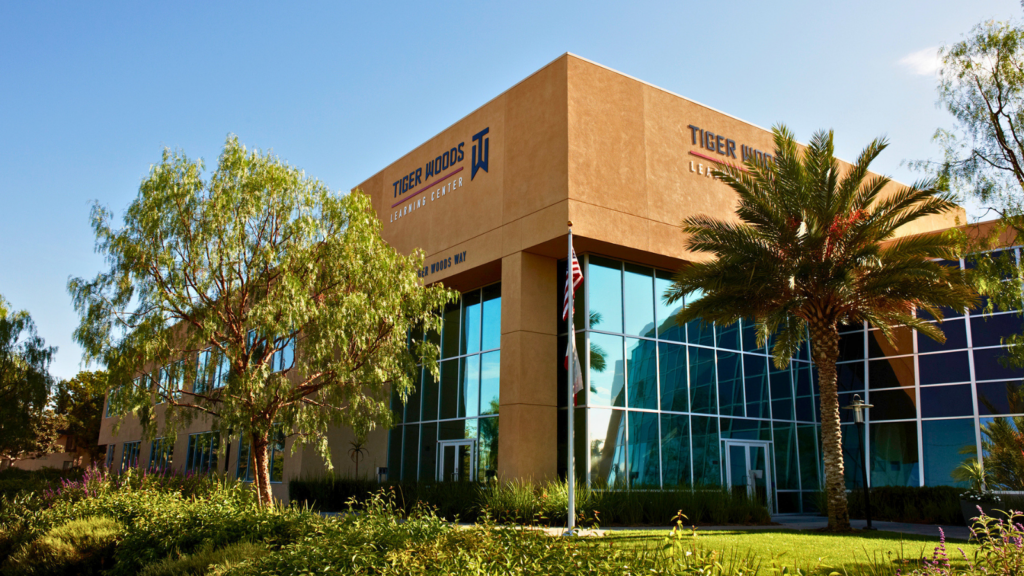
Twenty years ago, when I joined TGR Foundation to create what would become the Tiger Woods Learning Center, now TGR Learning Lab Anaheim, we weren’t trying to recreate an after-school program. We were trying to disrupt the space.
I came from the University of Wisconsin–Madison, where I studied educational leadership and policy to prepare to become a school principal. While there, I worked with a pre-college enrichment program serving first-generation students and students of color, helping prepare young people for the rigorous admission requirements of Big Ten universities.
That experience reinforced something I understood from my own life: talent and potential exist everywhere, but access to opportunity does not. Then one relationship changed my career trajectory.
My former golf coach at Long Beach State, Sue Ewart, told me that another former player, Dr. Katherine Bihr, had been appointed executive director of what would become the TGR Learning Lab. I immediately reached out.
More than a year before we opened the doors, we worked in a windowless office in Los Alamitos. I was appointed to oversee the middle and high school programs, and we were given something educators rarely receive: tremendous creative autonomy to imagine what learning could look and feel like for young people.
We had Tiger’s vision for a brick-and-mortar learning center, the chance to build something from the ground up and a shared belief that the status quo wasn’t good enough.
We Knew Something About Challenging Expectations
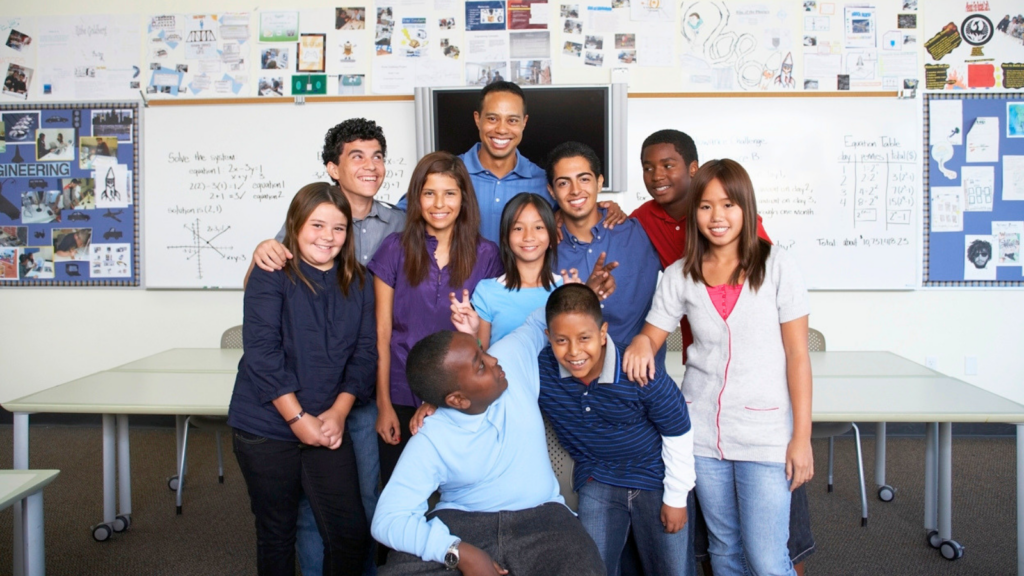
My connection to Tiger went back further than the Learning Lab. I am a first-generation Latina who started playing golf at age seven. In high school, I played for Long Beach Wilson. Tiger played for Western High School, and our teams competed against one another. At the time, there was not a girls’ golf team. Thanks to Title IX and access to the boys’ team, I competed anyway.
Tiger and I traveled very different paths, but we both came from working-class families and communities that shaped our motivation and competitiveness. Years later, we found ourselves together again—not competing on a golf course but creating opportunities for young people.
I remember telling Tiger he could be the best golfer in the world, but I’d be the best in education. I was joking, but only partly.
Our competitive instincts had found a new outlet. This time, winning meant creating an educational experience unlike anything else available to the students and communities we hoped to serve. The Learning Lab was built on the belief that those communities already had talent and that experiences, relationships and opportunities could help that talent flourish.
That mattered to Tiger. It mattered to me, and it became part of the fabric of the Learning Lab.
We Knew Something About Challenging Expectations
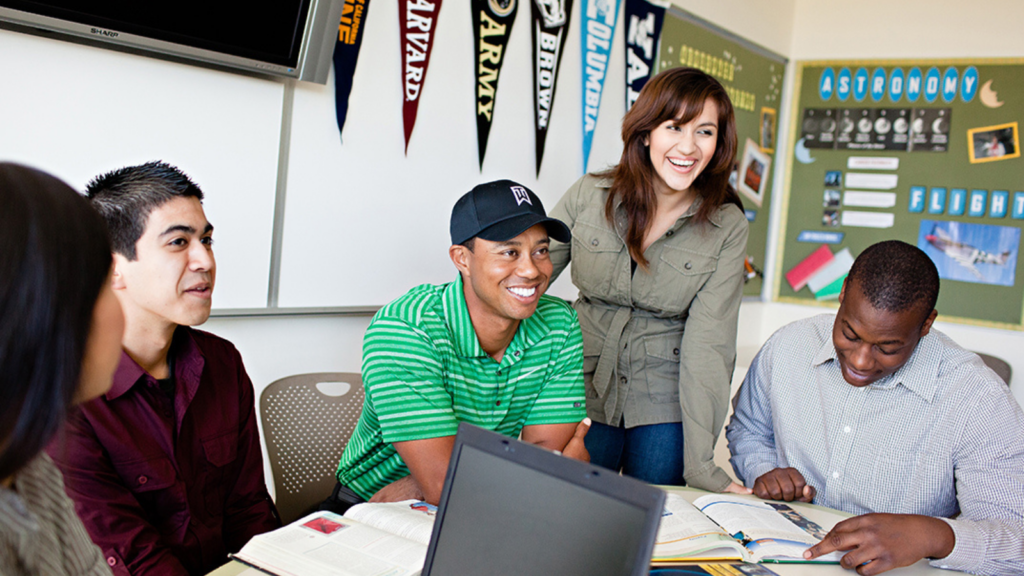
My connection to Tiger went back further than the Learning Lab. I am a first-generation Latina who started playing golf at age seven. In high school, I played for Long Beach Wilson. Tiger played for Western High School, and our teams competed against one another. At the time, there was not a girls’ golf team. Thanks to Title IX and access to the boys’ team, I competed anyway.
Tiger and I traveled very different paths, but we both came from working-class families and communities that shaped our motivation and competitiveness. Years later, we found ourselves together again—not competing on a golf course but creating opportunities for young people.
I remember telling Tiger he could be the best golfer in the world, but I’d be the best in education. I was joking, but only partly.
Our competitive instincts had found a new outlet. This time, winning meant creating an educational experience unlike anything else available to the students and communities we hoped to serve. The Learning Lab was built on the belief that those communities already had talent and that experiences, relationships and opportunities could help that talent flourish.
That mattered to Tiger. It mattered to me, and it became part of the fabric of the Learning Lab.
STEM Gave Us Permission to Think Differently
As the program director for the middle and high school experience, I brought my Wisconsin experience into our design process. I had seen the impact when first-generation students and students of color received rigorous preparation, exposure to college and a sense of belonging. I wondered what could happen if we created those opportunities even earlier.
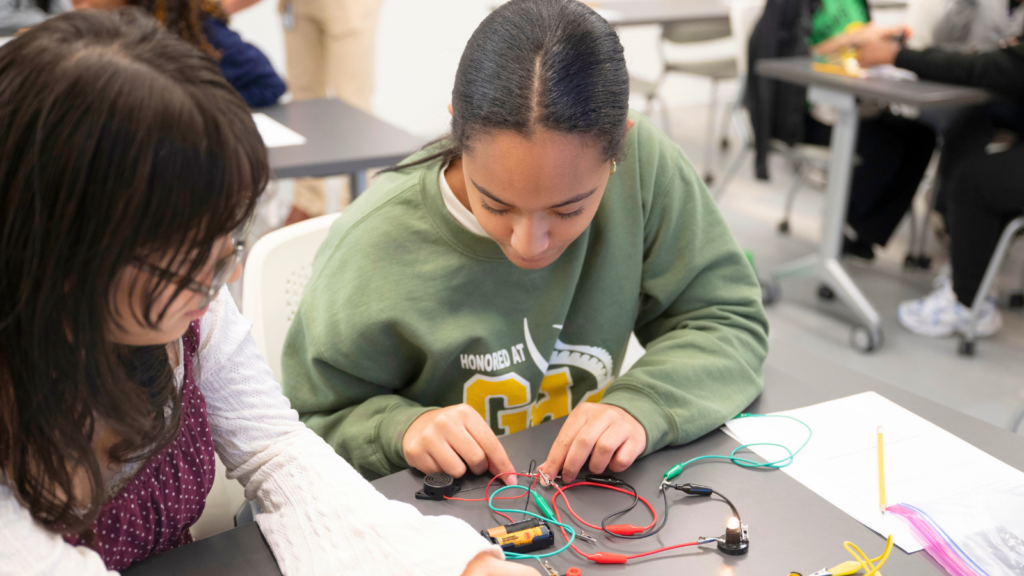
STEM (science, technology, engineering and mathematics) gave us a way to find out.
We designed aspects of the Learning Lab to simulate the college experience. Students could explore interests, make choices, learn in specialized environments and encounter technology, professionals and career possibilities years before choosing a college major or career pathway.
Today, we talk about personalized learning, student agency, career-connected learning and workforce development. In 2006, our approach was disruptive because we could build around the learner, but we also learned that creating access was only part of the equation.
Access Opens the Door. Relationships Bring Students Through It.
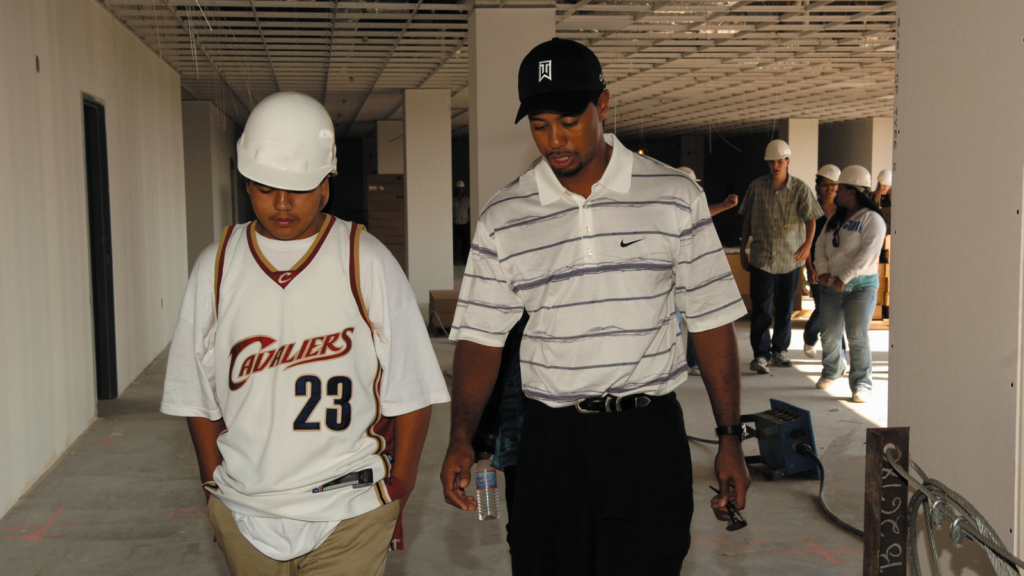
José Valdez was one of the first students we brought into the Learning Lab. I met him during a student listening tour at Savanna High School, across the street. José stopped in for a slice of pizza. Later, when I saw him walking home from school, I called his name over the Learning Lab’s newly installed outdoor intercom.
José will be the first to tell you that if he hadn’t stopped for that slice of pizza, his life might have taken a different path. Other pressures competed for his attention, as they do for many young people. But we knew José. We saw him, and we kept calling his name.
José remains one of the greatest gifts I have received from being an educator. His story reflects what the TGR Learning Lab can do when opportunity and relationships come together.
STEM can open a young person’s eyes to a future they hadn’t imagined. Relationships help them believe they belong.
Technology Changes. The Purpose Doesn’t.
Technology looks very different today than it did in 2006, but even then, technology was never the destination. It was a vehicle for creating opportunity.
That idea continued to shape my work. I eventually earned my doctorate at the University of Southern California, where my dissertation explored customizing education through online learning. In many ways, I was still asking the question we had asked in that windowless office: How can we design learning around the learner?
Online learning showed us how technology could extend opportunity beyond geography, buildings and traditional schedules. Today, artificial intelligence is expanding those possibilities even further.
The TGR Learning Lab has continued to evolve as technology has evolved. Our challenge as educators is to harness those tools to deepen curiosity, personalize learning and connect students to possibilities while preserving the human relationships that give those experiences meaning.
That challenge has become increasingly important in my work today.
The Future Still Needs Educators
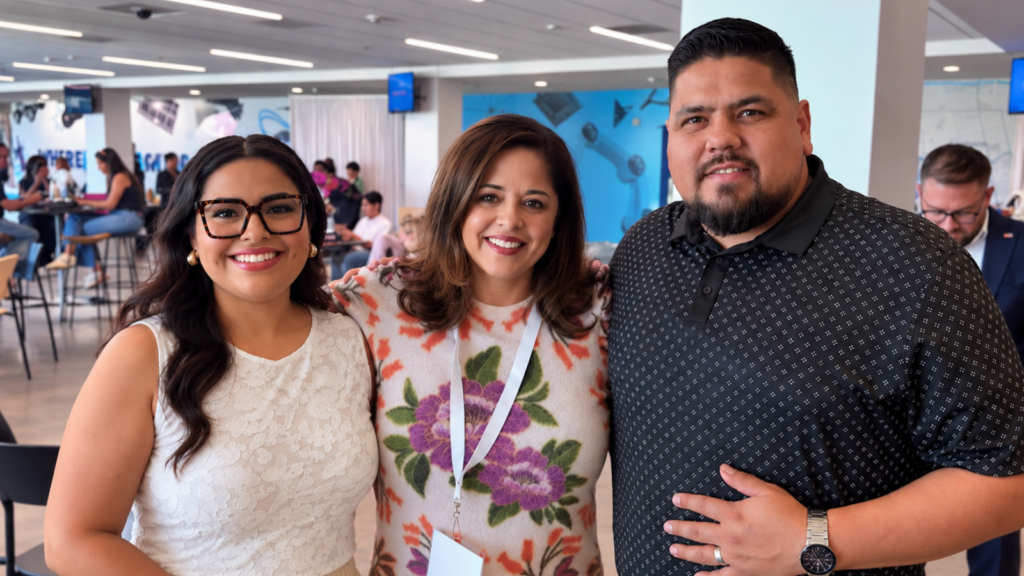
As a vice president at the American Association of Colleges for Teacher Education (AACTE), I now work in educator preparation nationwide. As a professor at the University of Southern California, I also have the privilege of preparing future schoolteachers and principals.
From both perspectives, I believe we need to do more than prepare excellent educators. We need to advocate for and celebrate the teaching profession.
Because behind every extraordinary STEM experience is something technology alone cannot provide: an educator who sees possibility in a young person. Artificial intelligence will change how students access information. Technology will continue to customize learning. Careers will continue to evolve, but no technology can replace the moment when an educator recognizes something in a student that the student does not yet recognize in themselves. That is the extraordinary privilege and reach of this profession. Coach Sue Ewart connected me with Dr. Bihr, which helped bring me to the Learning Lab. At the Learning Lab, I had the privilege of calling José’s name. Today, I prepare schoolteachers and leaders who will create communities for young people whose names I may never know. An educator’s influence travels farther than we can see.
Keep Calling Their Names
For anyone considering becoming a teacher, I hope you understand how much we need you.
We need educators who see STEM not simply as science, technology, engineering and mathematics, but as a doorway to curiosity, creativity, career pathways and greater education and social mobility. We need educators who embrace new technologies while building authentic relationships. And we need educators willing to challenge the status quo.
Teaching is demanding work, always has been and always will be, but we cannot allow the challenges facing the profession to become the only story we tell about it.
There is another story worth telling. It is the student who discovers a career they didn’t know existed. It is the young person who becomes the first in their family to enter a university, laboratory, technology company or perhaps someday, a classroom of their own.
And sometimes, it is a student who stops in for a slice of pizza.
When I think back to that windowless office in Los Alamitos, we didn’t know what the Learning Lab would become. We had Tiger’s vision, creative autonomy and a belief that young people deserved extraordinary learning experiences.
Twenty years later, technology and the workforce have changed, and the TGR Learning Lab has evolved with them. But what helps young people thrive has remained remarkably constant.
They need opportunities to discover who they might become, and they need people who know their names.
That is why STEM mattered when we opened the Learning Lab in 2006. It expanded what young people could see and imagine for their futures. That is why it matters today.
And that is why educators matter.
If you are thinking about becoming a teacher, I hope you see yourself in this work. You may teach a subject, but your influence will never be confined to that subject. You may never know which conversation mattered, which lesson sparked something or which student needed you to notice them that day. If you’re fortunate, someone like José comes back into your life and reminds you.
Twenty years ago, I could call his name over an intercom. Today, I understand that moment differently. See the young person in front of you. Recognize the possibility within them, and keep calling their name.

TGR Foundation has been driving dreams together in under-resourced communities since 1996. As we celebrate our 30-year anniversary, presented by EY, this reflection highlights the impact of our programs from organizational leaders throughout our history.
Learn more at TGRFoundation.org.